
 Austria
 Hungary
 Bosnia-Herzegovina
 Bulgaria
 China
 Germany
 Italy
 Croatia
 The Netherlands
 Poland
 Romania
 Russia
 Serbia
 Slovakia
 Slovenia
 Czech Republic
 Turkey

Having an industrial siding is convenient – but not every customer has one. Even so, rail need not be ruled out as a mode of transport. This is where MOBILER comes in: special containers can be transferred directly between trucks and rail wagons using a hydraulic device – without a crane or terminal infrastructure.
This opens up different options for structuring the transport chain. Transshipment can take place at decentralised locations, but MOBILER can also be integrated into existing terminal and network structures. The option used depends on the route, infrastructure and requirements of each flow of goods. Maxi Terminal Hamm is one example.
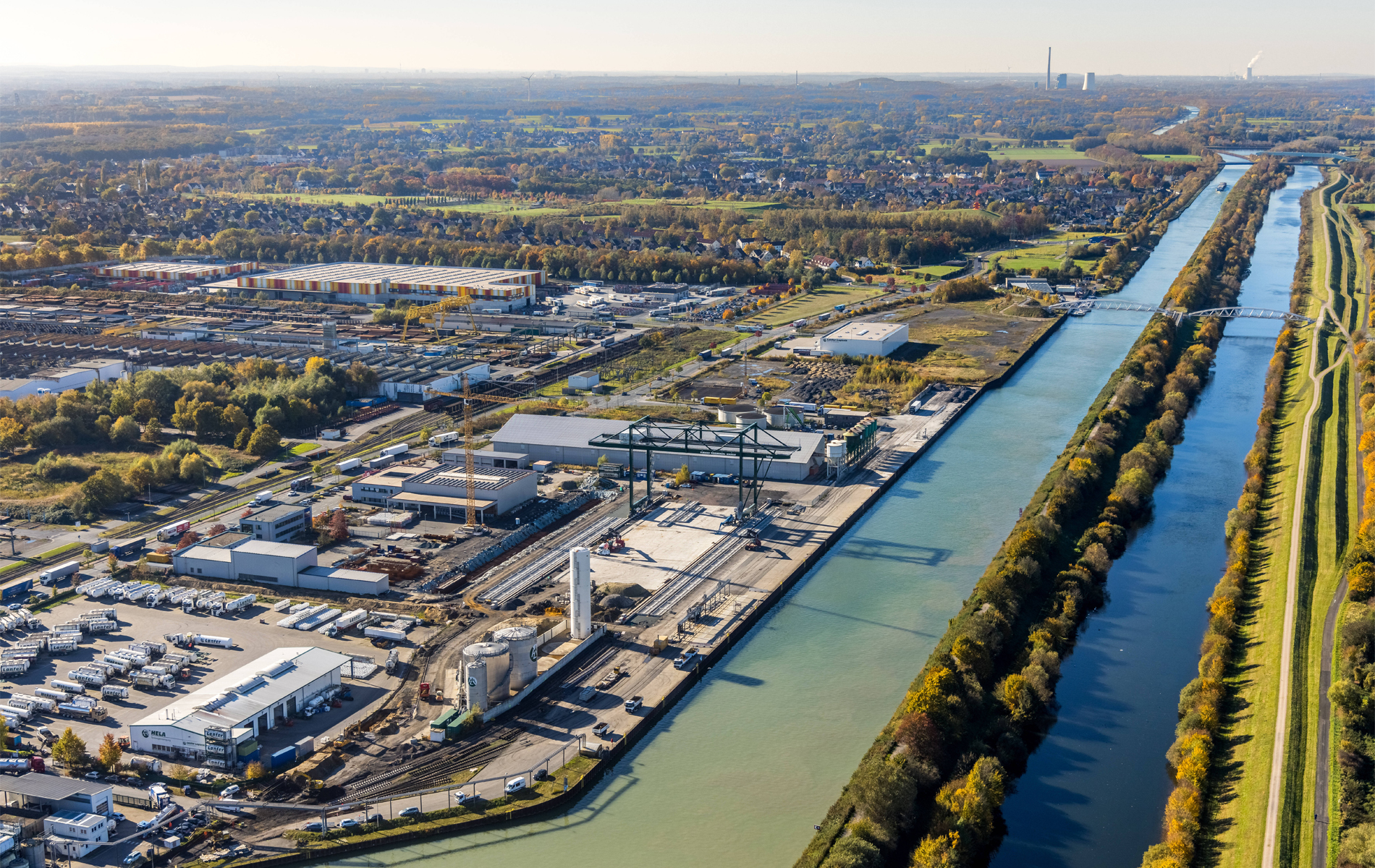
Flexible transport via Hamm
Maxi Terminal Hamm in North Rhine-Westphalia is a central transshipment point for several RCG MOBILER services – for example, for the recycling company Befesa. Befesa’s salt slag shipments originate in southern Sweden and travel to Germany by single wagonload transport. Some continue via Maxi Terminal Hamm to Lünen.
A key hub
In the first half of 2026 alone, RCG transported a total of around 13,800 tonnes to Hamm in 584 MOBILER containers. By the end of the year, the total is expected to reach around 24,800 tonnes, or 1,060 containers.
This is how the modes of transport work together along the entire route: rail provides an efficient main leg over long distances, while trucks provide flexible delivery over the first and last mile. RCG thus combines the advantages of rail and road in a coordinated logistics solution.
One system, different transport routes
Hamm shows that MOBILER is not tied to a particular transshipment model. Where conditions are suitable, containers can be transferred directly between rail wagons and trucks. At other locations, the system is integrated into existing terminals and networks. This allows the transport chain to be adapted to the existing infrastructure – rather than the other way round.
Rail covers the routes where it can play to its strengths, while road transport complements it where greater geographical flexibility is required.
Return journeys are also included in the planning. Where appropriate, RCG incorporates return loads and uses available capacity in the opposite direction too. This can reduce empty journeys and improve capacity utilisation across the entire transport chain.
A door-to-door approach
Ultimately, what matters is not each mode of transport in isolation, but how the modes work together. RCG organises the entire multimodal transport chain – including the main leg by rail, transshipment and the first and last mile by road.
Partners such as Maxi Terminal Hamm expand the options available within the network. Modern rail logistics does not have to choose between an industrial siding and a terminal, or between rail and road. What matters is using each mode of transport where it can best play to its strengths.
MOBILER provides the connection.